
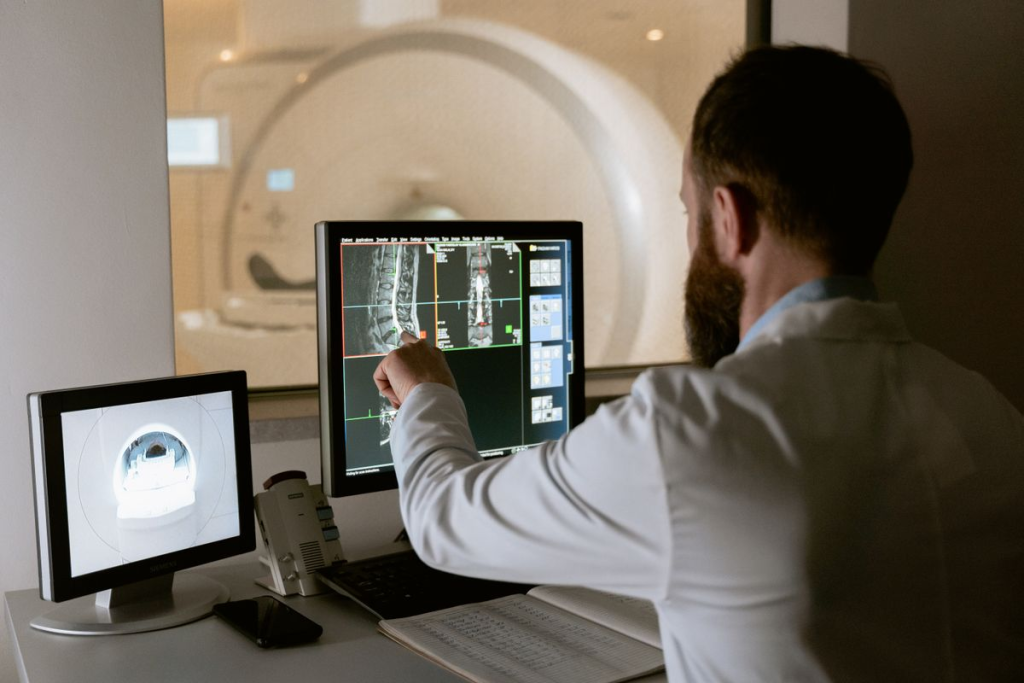
Walk into an operating room mid-procedure, and several screens may be running at once: an endoscopic feed, a vitals monitor, a PACS viewer nearby. A 4K label on the display does not guarantee the surgical team sees everything the imaging device captured. Image presentation depends on workstation software, graphics hardware, display devices, and the viewing environment.
4K True Resolution is, therefore, a question about the entire AV environment, not just the monitor. In high-stakes clinical environments, that distinction matters because teams make decisions from what the system presents.
4K True Resolution Starts With the Source
Native 4K means 3840 by 2160 pixels, roughly 8.3 million pixels, four times the pixel count of 1920 by 1080. That differs from lower-resolution content stretched to fill a 4K panel. Upscaling can enlarge an image, but it cannot add detail that was never captured, which is central to understanding what 4K True Resolution is and why it matters.
4K True Resolution also cannot restore detail lost before the image reaches the screen. Diagnostic image quality still depends on contrast, luminance, calibration, and grayscale or color mapping.
Higher Resolution Helps Most When the Entire Imaging Chain Supports It
Greater resolution matters most when clinicians examine fine detail across a large field of view, including radiology, digital pathology, and endoscopic imaging.
In a 2024 comparison of 6-megapixel and 12-megapixel radiology displays, chest and musculoskeletal readers worked 8.7% faster on the higher-resolution screens, though the study never touched diagnostic accuracy.
The finding supports a measured point: Higher display resolution can improve workflow when the clinical task benefits from additional visible detail. It does not prove that 4K automatically produces better diagnoses. Requirements vary by modality and clinical task.
Signal Distribution Can Preserve or Compromise True 4K
AV engineering matters once the image leaves the scanner or camera. A source can start as native 4K and still lose information before anyone reviews it. Downscaling and lossy compression can strip detail along the signal path, and tight bandwidth often forces trade-offs between resolution, frame rate, and compression settings.
DICOM tracks whether an image has undergone lossy compression, and for good reason: Discarded pixel data rarely comes back. AVIXA notes that uncompressed 4K video can demand 10 Gbps or more, depending on frame rate and bit depth, numbers that make bandwidth planning unavoidable.
Healthcare AV solutions need displays and network infrastructure treated as one system rather than separate purchases, so image quality holds up from source to screen.
Reliable Medical Imaging Requires More Than Pixel Count
A 4K display is only useful if the image reaching it still carries the detail clinicians need. That means looking beyond the screen itself and checking the full signal path.
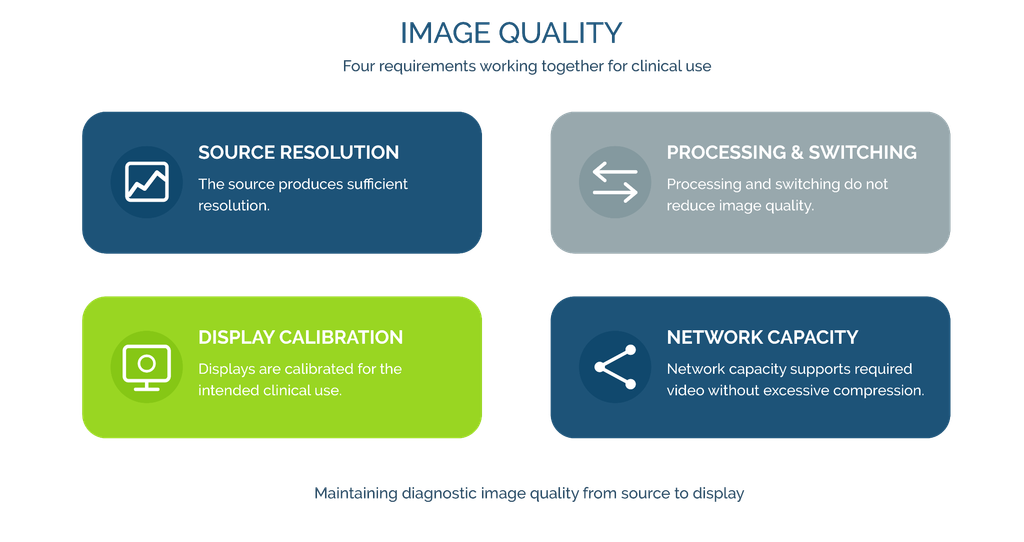
Before upgrading, healthcare teams should confirm that:
- the source produces sufficient resolution
- processing and switching do not reduce image quality
- displays are calibrated for the intended clinical use
- network capacity can support the required video without excessive compression
Security matters for the same reason. Medical images move through connected systems, not isolated displays. NIST’s cybersecurity guidance for PACS addresses the confidentiality and integrity of that environment.
At AGT, we design healthcare AV environments around the full signal path, from source devices and displays to the network infrastructure behind them. That approach helps preserve 4K True Resolution, support reliable clinical workflows, and keep image quality consistent from source to display. If you are planning a new imaging environment or upgrading an existing one, contact our team to discuss what the system needs to support.

Keith Hughes
Keith Hughes is Director of National Sales at AGT, where he focuses on state and local government, healthcare and education clients. With over 25 years of experience in AV, collaboration technology, and IT services — including work in unified communications, managed services, and supporting state agencies — he brings a strong understanding of what government, healthcare and education institutions need from their collaboration environments. He's been with AGT since 2016.