
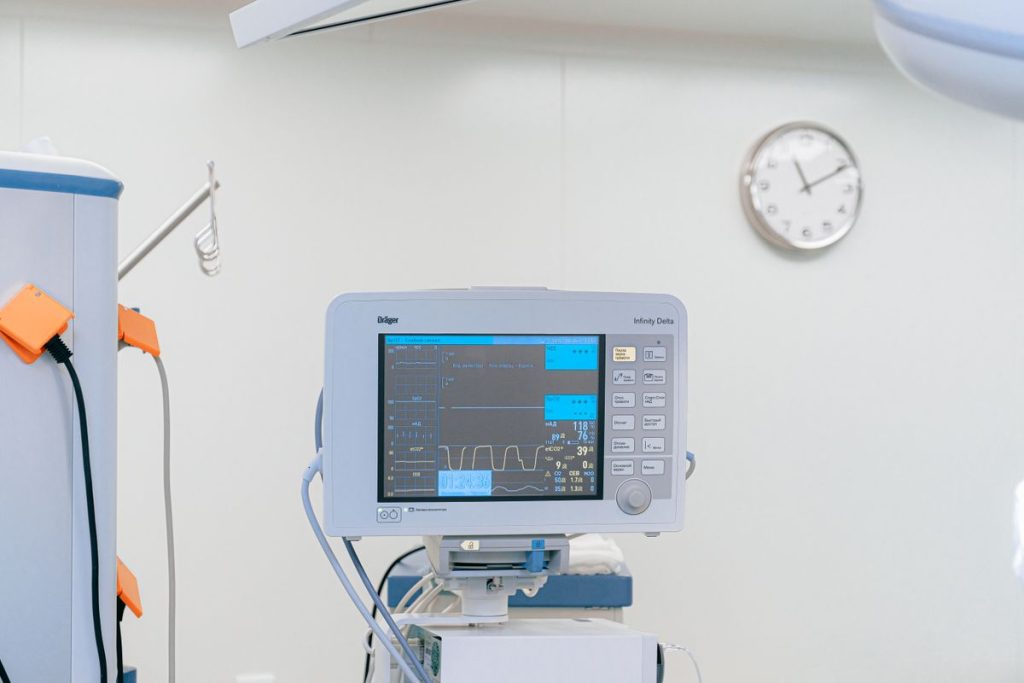
Walk into a central telemetry station at 2 a.m. Nurses are watching heart rhythms while taking calls from the floor. The bedside monitor captures the vital signs. The next challenge is getting that patient data to the right clinician, in the right place, without losing context.
This is where patient monitoring technology becomes part of the wider AV workflow. Patient data may start at the bedside, but clinicians often need to view and discuss it elsewhere.
That’s why integration matters so much. A February 2026 ASTP/ONC data brief found 91% of hospitals had linked third-party technology to their EHR by 2024. Just 52% did it through a standards-based API. Connectivity is common. Standardization still isn’t.
Integrating Patient Monitoring Technology With Clinical AV
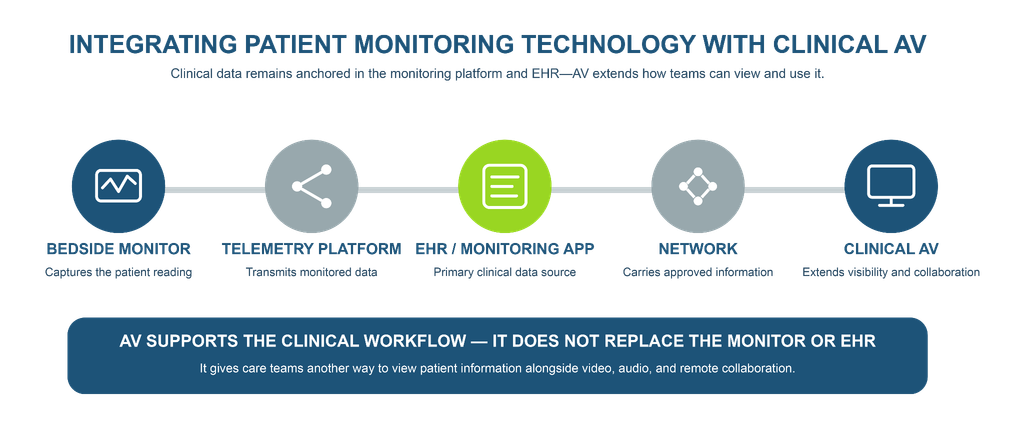
A bedside monitor captures the reading, sends it through the telemetry platform, and passes it into the EHR or monitoring application. From there, your network can carry approved information to an AV display, virtual-care station, or command center.
AV supports that clinical workflow. It does not replace the monitor or EHR as the main source of patient data. Instead, it gives your teams another way to view that information alongside video, audio, or remote collaboration.
You can see this setup in telemetry stations, virtual nursing, tele-ICU consults, and smart patient rooms, where AV system design for remote patient monitoring helps connect clinical data with the video, audio, and communication tools staff use throughout the care environment.
Building Reliable, Interoperable Clinical Environments
Interoperability is often the harder problem. HL7’s FHIR Vital Signs profile helps standardize how measurements such as blood pressure and pulse oximetry are structured and exchanged between systems.
Your network also must support the traffic reliably. That means enough bandwidth, dependable wired and wireless coverage, synchronized device and patient identity, and redundancy for critical components. AVIXA’s AV-over-IP guidance also treats bandwidth and network design as core performance issues.
Bring your AV, IT, clinical engineering, and EHR teams together early so they can agree on interfaces, system ownership, and failure procedures before deployment. That coordination is a key part of building reliable healthcare AV solutions that fit into the wider clinical environment.
Protecting Patient Data and Clinical Workflows
As patient monitoring technology connects with networked AV, cybersecurity becomes part of the clinical workflow. The FDA distinguishes software that only displays medical-device data from software that generates alarms, prioritizes patients, or supports immediate intervention.
In 2025, the FDA warned that certain network-connected patient monitors had vulnerabilities letting attackers seize remote control and pull patient data off the network. Protect connected systems with segmentation and access controls. Add encryption and centralized monitoring on top.
If your AV environment creates, receives, maintains, or transmits ePHI, include it in your HIPAA Security Rule safeguards and risk management.
Patient Monitoring Works Best as an Integrated Environment
Effective patient monitoring technology depends on more than the bedside device. Your clinical data, network, AV endpoints, security controls, and staff workflows all need to work together.
AGT has spent decades supporting healthcare and other high-stakes environments where communication systems must work the first time. Contact AGT to start planning an integrated healthcare AV environment built around reliable patient monitoring and clinical communication.

Keith Hughes is Director of National Sales at AGT, where he focuses on state and local government, healthcare and education clients. With over 25 years of experience in AV, collaboration technology, and IT services — including work in unified communications, managed services, and supporting state agencies — he brings a strong understanding of what government, healthcare and education institutions need from their collaboration environments. He's been with AGT since 2016.