

Mental health facilities are under growing pressure to provide secure, flexible, and patient-centered care across in-person, virtual, and hybrid settings. That shift is making audiovisual integration a core part of healthcare infrastructure, not a secondary technology purchase.
For behavioral health leaders, IT teams, facility managers, and program administrators, the question is no longer whether technology belongs in clinical spaces. The more important question is whether that technology will work reliably when a therapy session begins, a remote psychiatrist joins a consultation, a family meeting needs to happen across state lines, or staff need to coordinate care without interruption.
In these settings, an AV failure is not simply inconvenient. Poor audio can make a therapy session difficult to follow. A confusing room-control system can delay care. A poorly positioned display can expose sensitive information. An unsupported videoconferencing room can leave already-stretched staff trying to troubleshoot the technology instead of focusing on patients.
That is why more mental health facilities are approaching AV as a long-term operational decision. They need systems that are secure, intuitive, clinically appropriate, and backed by support long after installation day.
Applied Global Technologies helps organizations design, deploy, and support mission-critical collaboration environments for healthcare, government, military, and enterprise settings. Through healthcare AV solutions, organizations can build a dependable communication infrastructure that supports patient care, staff collaboration, and future growth without placing an unnecessary burden on internal teams.
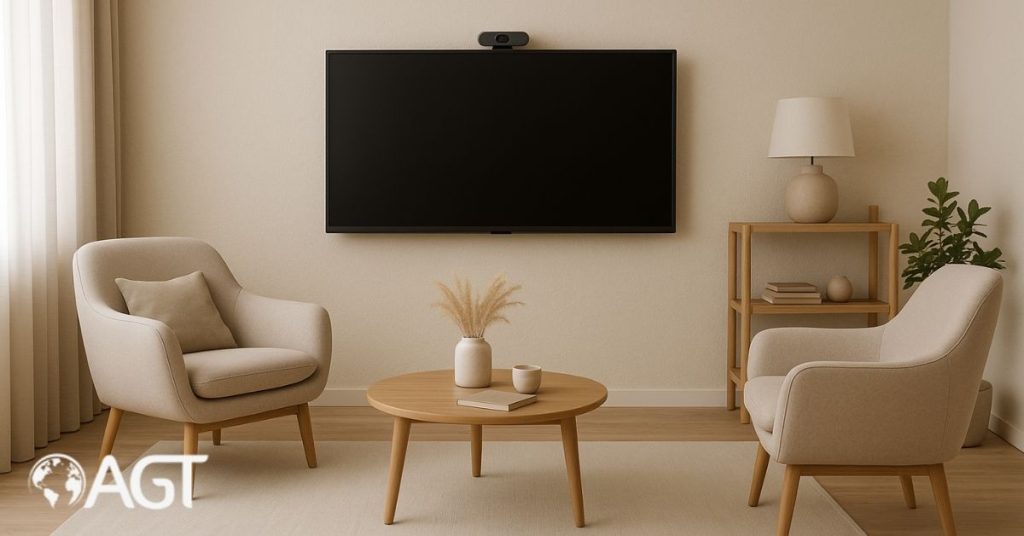
What AV Integration Means for Mental Health Facilities
AV integration is the coordinated design and deployment of audiovisual technology so that separate components function as one reliable, easy-to-use system. In mental health facilities, these can include displays, cameras, microphones, speakers, video-conferencing platforms, room controls, digital signage, acoustic treatments, wireless presentation tools, and communication systems.
The goal is not to fill rooms with technology. The goal is to remove friction from communication.
A therapist should be able to begin a virtual session without searching for cables or adjusting multiple settings. A staff member should be able to launch a hybrid care conference without having to guess which remote controls the display. A family should be able to join an approved virtual meeting without the clinical team having to worry about whether the room’s camera, microphone, or security configuration will fail.
A properly integrated AV environment may include:
• Secure video-conferencing systems for telepsychiatry, virtual therapy, and family meetings.
• High-quality cameras and microphones that support natural conversation.
• Distributed audio systems for group therapy, training, and education rooms.
• Digital signage for navigation, patient education, schedules, and facility updates.
• Wireless screen-sharing tools for clinical presentations and staff collaboration.
• Centralized room controls that simplify common tasks.
• Acoustic solutions that improve speech intelligibility and help protect privacy.
• Networked monitoring tools that identify technical issues before they disrupt a session.
The difference between standalone equipment and integrated AV is substantial. A laptop, webcam, portable speaker, and display may support a basic video call. But a collection of disconnected devices often leads to inconsistent user experiences, security concerns, unnecessary troubleshooting, and unreliable performance.
By comparison, professionally designed audiovisual integration aligns technology with the room, the users, the workflow, and the organization’s support requirements. Applied Global Technologies designs systems around each client’s environment, people, and mission while providing long-term support intended to protect system health and user satisfaction over time.
Why Mental Health Facilities Need Better AV Infrastructure
Behavioral healthcare is becoming more connected, more distributed, and more dependent on reliable communication. Facilities may serve patients in person while coordinating care with remote psychiatrists, caregivers, interpreters, family members, referral partners, and specialists.
That evolution has made AV infrastructure a clinical and operational necessity.
Telebehavioral health remains a major driver. Federal telehealth policy recognizes behavioral health as a distinct and enduring use case. Medicare allows eligible patients to receive behavioral and mental health telehealth services from home without geographic restrictions. In certain circumstances, audio-only behavioral-health telehealth services also remain available, which recognizes that not every patient has reliable broadband service or video-capable devices.
However, telehealth does not remove the need for physical space. In many cases, it increases the importance of well-planned clinical rooms.
Consider the patient who cannot safely discuss personal concerns at home because other household members are nearby. Consider a rural outpatient clinic that needs to connect a patient with a psychiatric specialist several hours away. Consider an inpatient behavioral-health unit that needs to arrange a virtual family consultation. Consider a treatment center that needs to conduct a hybrid discharge-planning meeting involving clinicians, case managers, and family members.
Each scenario requires a room that supports privacy, clarity, security, and dependable communication.
The U.S. Department of Health and Human Services identifies one-on-one teletherapy as the most common form of telebehavioral health. It notes that telebehavioral health can offer patients private access to care from a safe space and can make appointments more convenient by reducing barriers related to transportation, work, or childcare.
For mental health facilities, that demand creates a practical responsibility. If the organization provides virtual behavioral health services, the technology and physical environment must support the quality of care the organization expects to deliver.
Telehealth Is Not Just a Video Call
It is tempting to view telehealth as a camera, a display, and an internet connection. In a behavioral-health setting, that mindset is incomplete.
A successful teletherapy session requires that both the patient and the clinician hear each other clearly, see facial expressions, feel confident that the conversation is private, and avoid unnecessary disruptions. The AV system should support the relationship, not compete with it.
Research indicates that telehealth can be a viable option for certain psychotherapy services. A systematic review of randomized controlled trials comparing telehealth and face-to-face psychotherapy found insufficient evidence of differences in symptom severity, symptom improvement, or global functioning across the conditions examined. The authors also noted limitations in the available evidence and the need for further research.
The appropriate takeaway is not that virtual care can replace all in-person behavioral healthcare. It cannot. Clinical appropriateness depends on the patient, provider, diagnosis, safety needs, and care setting. The more useful conclusion is that telebehavioral health deserves professional-grade planning when it is part of a facility’s care model.
The room itself plays a major role.
A video session can become difficult when the clinician is backlit by a window, the microphone picks up HVAC noise, the audio echoes across hard surfaces, or the camera is placed far above eye level. Patients may not always identify these problems as technology issues. They may simply feel that the conversation is tiring, impersonal, awkward, or less private than it should be.
The strongest telehealth spaces make the technology feel ordinary and dependable. Staff enter the room, begin the session, and focus on the patient rather than the equipment.
Audio Quality Is Often More Important Than Video Quality
When mental health facilities plan telehealth or hybrid care rooms, attention often goes first to the camera and display. Those components matter, but sound usually has a greater effect on the quality of a behavioral-health conversation.
Therapy depends on language, tone, pacing, silence, and subtle changes in voice. Audio problems can obscure those details.
Echo can make participants speak more slowly or repeat themselves. Poor microphone placement can make soft-spoken patients difficult to hear. Background noise from ventilation equipment, hallway traffic, or adjacent rooms can distract from sensitive discussions. Sound leakage can undermine the patient’s sense of confidentiality even if no one else can fully understand the conversation.
A practical AV design process should therefore begin with acoustic performance.
For individual therapy and telehealth rooms, mental health facilities should evaluate:
• Whether speech can be heard clearly from each seating position.
• Whether conversations can be heard outside the room.
• Whether the room creates echo or reverberation.
• Whether hard surfaces, glass walls, exposed ceilings, or sparse furnishings affect sound quality.
• Whether HVAC systems introduce continuous background noise.
• Whether speakers and microphones are positioned for natural conversation.
• Whether the display volume can be controlled without becoming too loud or too soft.
A room does not need to look like a recording studio to provide good audio. It needs thoughtful planning. Acoustic treatment, appropriate furniture, controlled speaker placement, suitable microphone selection, and sound isolation can make a meaningful difference.
A modestly equipped therapy room with good acoustics and simple controls will often provide a better clinical experience than a visually impressive room with poor sound.
Privacy Is Designed Into the Room
Privacy in mental health facilities is not limited to the video-conferencing platform. It is shaped by every element of the environment.
A telehealth platform may be secure, but the session can still present privacy concerns if a screen is visible from a hallway, audio carries into an adjacent room, patient information appears on a display after a meeting ends, or someone enters the room unexpectedly.
The Office of the National Coordinator for Health Information Technology explains that the HIPAA Privacy, Security, and Breach Notification Rules provide the primary federal protections for health information. The Privacy Rule sets limits on the use and disclosure of health information, while the Security Rule requires administrative, technical, and physical safeguards.
For AV design and operations, those safeguards require careful planning.
Mental health facilities should consider the following questions before implementing or expanding AV systems:
• Is the video conferencing platform approved by the organization and configured in accordance with internal security policies?
• Who has access to connected cameras, microphones, room controls, and recordings?
• Are displays placed to minimize visibility from public or semi-public areas?
• Are audio devices selected and configured to prevent conversations from being overheard?
• Are connected AV devices included in cybersecurity, inventory, patching, and lifecycle-management processes?
• Do staff know how to verify that a patient is in a private setting before a virtual session begins?
• Is there a clear policy for screen sharing, recording, interpreter access, and family participation?
HHS guidance for telebehavioral health advises providers to discuss privacy risks with patients, confirm who is present during the appointment, and consider whether a caregiver, interpreter, or other person may affect the patient’s ability to speak freely.
This is an important operational point. Technology can enable virtual care, but it cannot independently guarantee privacy. Staff training, clinical judgment, room design, secure configurations, and clear policies must work together.
Applied Global Technologies approaches AV as a collaboration infrastructure rather than isolated hardware. Its healthcare services are designed to align AV environments with patient-care objectives, compliance frameworks, and digital transformation goals. The company also provides support models that can include remote support, proactive monitoring, on-site staffing, software updates, performance analytics, and lifecycle planning.
Safety Requirements Must Be Evaluated by Care Setting
Mental health facilities include a wide range of environments. An outpatient counseling office, a secure inpatient unit, a crisis stabilization center, a residential treatment program, and an administrative conference room may all use AV technology differently.
This is why there is no one-size-fits-all behavioral-health AV package.
Equipment selection, mounting methods, cable management, control access, display placement, and room configuration should be evaluated according to the clinical purpose and environmental risks of each space. In higher-acuity environments, facilities may need to consider protected hardware, tamper-resistant components, durable materials, secure mounting, and carefully managed access to controls.
The Joint Commission does not recommend specific ligature-resistant products. Instead, it advises healthcare organizations to conduct an environmental risk assessment, determine appropriate products for their setting, and ensure that products are installed and maintained according to manufacturer instructions.
For AV teams, this reinforces the need for collaboration. Clinical leaders, facility managers, safety officers, IT teams, architects, and AV integrators should evaluate the room together. A solution that works well in a standard conference room may not be appropriate in a behavioral-health space.
The goal is not to make every room look more technical or restrictive. The goal is to select and deploy technology that fits the setting, supports care delivery, and reduces avoidable risk.
Telehealth Rooms Are Now Clinical Assets
Many organizations initially created telehealth spaces out of necessity. A spare office became a virtual-care room. A rolling cart was moved between departments. A clinician used a laptop in a meeting room when an appointment required video.
Those solutions helped organizations respond quickly. But temporary arrangements often become permanent without being reassessed.
Mental health facilities that expect to use telehealth regularly should treat telehealth rooms as clinical assets. That means planning them with the same care applied to other patient-facing spaces.
A purpose-built telehealth room should include five essentials:
1. Clear, natural audio
Microphones, speakers, acoustic treatment, and room layout should support speech without noticeable echo, excessive volume, or persistent background noise.
2. Thoughtful camera placement
The camera should be positioned close to eye level and near the display. This helps create a more natural conversational experience and improves the appearance of eye contact.
3. Balanced lighting
Soft, even lighting makes facial expressions easier to see. Facilities should avoid strong backlighting from windows or harsh overhead lighting that causes shadows.
4. Reliable privacy controls
Sound isolation, display placement, access controls, approved conferencing tools, and staff procedures should work together to protect confidential discussions.
5. Simple controls
Clinicians should not have to manage a maze of cables, remotes, software settings, and inputs before beginning a session.
HHS guidance for individual teletherapy recommends that providers look toward the camera when making eye contact and explain to patients how the session’s privacy and security will be protected. Small design choices, including camera alignment and control simplicity, can make it easier for clinicians to follow these practices consistently.
Group Therapy Rooms Need Purpose-Built AV Design
Group therapy spaces create different AV requirements than individual telehealth rooms. A group room may host psychoeducation sessions, peer-support programming, family education, remote guest speakers, hybrid workshops, staff training, or multidisciplinary care discussions.
The technology must support both the room and the people in it.
A large display alone is rarely enough. If remote participants cannot hear the group clearly, if people in the back cannot see the content, or if the facilitator must continuously adjust settings, the system is not supporting the session.
Key design considerations for group therapy rooms include:
• Distributed audio that provides intelligible sound throughout the room.
• Microphones selected for the room layout and expected participation patterns.
• Cameras that capture the facilitator and, when appropriate, the group without creating a distracting or overly surveilled atmosphere.
• Displays positioned so that participants can view content without losing connection with one another.
• Secure, intuitive controls that allow staff to move between telehealth, presentation, and local media modes.
• Cable and equipment management that keeps the room organized and avoids unnecessary visual clutter.
• AV components selected according to facility safety and durability requirements.
The most successful group therapy AV systems are usually not the most visible. They are the systems that operate without forcing the facilitator to stop the conversation, search for a remote, change an input, reconnect a call, or ask participants to repeat themselves.
Consistency is important. When rooms use standard control logic and common conferencing workflows, staff training becomes easier, technical support becomes more efficient, and users are more likely to adopt the system rather than bypass it.
For organizations that need reliable conferencing across multiple rooms or sites, managed video conferencing services can provide proactive monitoring, alerts, help desk support, troubleshooting, on-site staffing, integration engineering, and maintenance management. AGT states that its monitoring capabilities can track the health of video-conferencing and AV assets before issues become user-facing disruptions.
Digital Signage Should Reduce Confusion, Not Add Noise
Digital signage can be valuable in mental health facilities, but only when it is planned with the patient experience in mind.
Waiting areas, check-in zones, reception spaces, and family lounges can be emotionally charged environments. Patients may be anxious, fatigued, overstimulated, or uncertain about where to go. Family members may be looking for updates or practical information. A screen that plays loud content, rapidly changing animations, crowded slides, or distressing news may make the environment less comfortable.
Thoughtful digital signage can help by delivering clear, limited, useful information.
Appropriate uses may include:
• Wayfinding for admissions, therapy rooms, consultation spaces, and visitor check-in.
• Visiting hours, program schedules, and facility updates.
• Explanations of available support services.
• Community resource information.
• Educational content reviewed by clinical or communications teams.
• Instructions for visitors and families.
• Calm, nonintrusive visual content used selectively.
The strategic issue is content ownership. Someone must decide what appears on the screens, how often it is reviewed, whether it is accessible, and whether it remains relevant.
Without an owner, even a well-designed digital signage system can become outdated. A screen with old program information, unclear announcements, or inconsistent branding can weaken trust rather than improve it.
A practical governance model may include clinical leadership, operations, communications, compliance, and facilities personnel. This cross-functional approach helps ensure that digital signage supports the organization’s communication goals without overlooking the emotional needs of the people using the facility.
AV Integration Improves Staff Collaboration and Training
Mental health facilities depend on coordinated work across clinical disciplines. Therapists, psychiatrists, nurses, social workers, case managers, peer-support specialists, administrators, and referral partners may all contribute to a patient’s care journey.
Those teams may work in separate buildings, clinics, counties, or states.
Integrated AV systems can support:
• Hybrid clinical case conferences.
• Remote psychiatric consultations.
• Virtual supervision and peer collaboration.
• Continuing education and professional development.
• Crisis-response coordination.
• Multisite leadership meetings.
• Care-transition planning.
• Authorized family and caregiver participation.
The World Health Organization notes that digital technologies can support mental health systems by educating the public, training and supporting healthcare workers, providing remote care, and enabling self-help.
For facility leaders, the broader value is operational resilience. Reliable AV systems help staff collaborate when travel is impractical, when specialists are off-site, when several locations need to coordinate, or when training must reach a distributed workforce.
Applied Global Technologies supports high-stakes collaboration environments through AV design, integration, managed services, and conferencing solutions. Its video collaboration expertise includes the design, installation, management, and support of video collaboration systems intended to reduce user burden and simplify day-to-day communication.
The Best AV Systems Are Easy to Use
In healthcare, complicated technology is often underused.
A system may have advanced features, but if staff must select from multiple inputs, pair devices manually, manage inconsistent logins, adjust audio settings, and identify the correct remote before every call, they will eventually look for simpler alternatives.
Those alternatives may create new problems. Staff may use personal devices, unapproved platforms, portable equipment, or informal workarounds that make the experience less secure and less consistent.
For mental health facilities, usability should be a primary procurement requirement.
1. A strong room workflow might look like this:
2. A clinician enters the room.
3. The clinician selects “Telehealth,” “Group Session,” or “Presentation” from a clearly labeled control panel.
4. The display, camera, microphones, speakers, and room settings activate automatically.
5. The clinician starts the approved session with minimal additional steps.
6. At the end of the session, the room resets according to established privacy and operational policies.
This approach reduces cognitive load. It also makes training easier.
The value of “one-touch” control is not the touchscreen itself. The value is that the system works predictably. Staff can trust it. Patients do not have to wait through troubleshooting. IT teams do not receive avoidable support tickets. Facility leaders do not have to wonder whether critical collaboration spaces are functioning as intended.
AGT’s approach centers on high-touch project delivery and systems that function reliably and intuitively, enabling users to communicate, make decisions, and collaborate without technical friction. The company also provides proactive, full-lifecycle support that can include scheduled service, monitoring, rapid-response assistance, and maintenance programs.
How Mental Health Facilities Can Plan an AV Project
The most successful AV projects begin before equipment is selected. They begin by understanding the people, rooms, workflows, safety requirements, and support expectations involved.
1. Start With a Room-by-Room Assessment
Do not assume every room needs the same AV system. Identify the function of each space and determine what communication activities must happen there.
Possible room types include:
• Individual therapy rooms.
• Telepsychiatry and virtual consultation rooms.
• Group therapy rooms.
• Family meeting rooms.
• Crisis consultation spaces.
• Staff huddle rooms.
• Training rooms.
• Reception and waiting areas.
• Administrative conference rooms.
• Community education spaces.
For each room, document the users, activities, privacy requirements, safety considerations, expected remote participation, acoustic conditions, lighting, power availability, network needs, and support requirements.
2. Involve Clinical Staff Early
Clinicians understand how rooms are actually used. They can identify where patients sit, how furniture is arranged, when meetings must begin promptly, which controls are confusing, and where privacy may be compromised.
Their insights can prevent design errors that are expensive to correct later.
3. Coordinate AV, IT, Security, and Facilities
AV systems sit at the intersection of technology and space. They need power, network connectivity, secure configurations, furniture coordination, cable pathways, acoustic planning, and operational support.
When teams work separately, issues often appear late in the project. A display may be mounted where it cannot be viewed comfortably. A camera may capture an awkward angle. Network requirements may be identified after installation. Acoustic concerns may surface only after a room is occupied.
Integrated planning reduces these risks.
4. Pilot Before Full Deployment
A pilot room gives facilities the chance to test assumptions with real users. Conduct a sample teletherapy session, group presentation, family conference, staff huddle, and remote consultation.
Evaluate:
• Audio quality.
• Camera framing.
• Lighting.
• Privacy.
• Ease of launching a session.
• Control-system usability.
• Network reliability.
• Staff confidence.
• Support response procedures.
• Patient and family feedback when appropriate.
A pilot does not guarantee perfection, but it creates evidence before a larger investment is made.
5. Plan for Support After Go-Live
Installation is not the end of an AV project. Systems need monitoring, maintenance, software updates, user support, lifecycle planning, and periodic optimization.
This is where the right integration partner matters. A vendor that installs equipment and then leaves can pose long-term risks for internal IT and facilities teams. A partner that remains involved can help organizations protect uptime, adapt to changing workflows, and manage issues before they disrupt care.
Applied Global Technologies provides managed AV services designed to support organizations with monitoring, maintenance, and ongoing operational assistance. Its broader service model emphasizes long-term relationships, tailored support plans, and technology environments that remain reliable as client needs evolve.
A Reliable AV Partner Reduces Operational Risk
Mental health facilities should not have to choose between modern collaboration tools and peace of mind. The right AV strategy can deliver both.
The most effective systems are secure without becoming difficult to use. They are flexible without becoming overly complicated. They support clinicians without forcing them to become technology experts. They protect privacy without preventing meaningful collaboration.
This is the standard that high-stakes healthcare environments require.
Applied Global Technologies positions itself as a full-service AV integration partner for organizations where communication, uptime, and security matter. With experience across healthcare, government, military, and enterprise environments, AGT provides tailored AV design, engineering, installation, managed services, and long-term support. The company notes that it has served more than 40 Fortune 100 clients, completed $210 million in government contracts, maintained more than 50 industry-recognized certifications, and delivered AV solutions for more than 30 years.
For mental health facilities, that level of accountability matters. It means working with a partner that understands that a telehealth room, family meeting space, staff collaboration environment, or training room cannot simply look complete. It must work consistently, securely, and intuitively when people depend on it.
The future of behavioral healthcare will continue to blend in-person and virtual care. Facilities that prepare now can build communication environments that support clinical teams, reduce technology risk, and create a more dependable experience for every patient, family member, and staff member who enters the room.
Conclusion
AV integration is becoming an essential investment for mental health facilities that need to deliver secure, flexible, and patient-centered care. From telehealth rooms and group therapy spaces to staff collaboration and digital communications, reliable audiovisual systems remove technical barriers, allowing clinicians to focus on the people in their care.
The most effective AV strategy is built around clinical workflow, privacy, safety, usability, and long-term support. With the right technology partner, mental health facilities can create dependable collaboration environments that protect operational continuity while meeting the evolving needs of patients, families, and care teams.
Contact Applied Global Technologies to learn how our tailored AV solutions in healthcare can help your organization design, integrate, manage, and support technology environments that work reliably when communication matters most.
FAQs
Why do mental health facilities need AV integration?
Mental health facilities need AV integration to support telehealth, virtual family meetings, group therapy, staff collaboration, training, and patient communications. A professionally integrated system improves reliability, helps protect confidential conversations, and reduces the technical burden placed on clinicians and staff.
What AV equipment is used in mental health facilities?
Common AV solutions include video-conferencing cameras, microphones, speakers, displays, room-control systems, digital signage, wireless presentation tools, and acoustic treatments. The exact technology should be chosen based on the room’s purpose, patient population, privacy requirements, safety policies, and expected clinical workflow.
How can AV systems improve telehealth services?
AV systems improve telehealth by providing clear audio, dependable video, appropriate lighting, secure access to approved conferencing platforms, and simple room controls. These features help clinicians avoid technical interruptions and create a more natural, professional experience for patients receiving virtual behavioral-health services.
What privacy considerations apply to AV in mental health facilities?
Mental health facilities should protect patient privacy by using approved conferencing platforms, securing connected AV devices, managing access permissions, and preventing conversations or on-screen information from being seen or heard by unauthorized people. HHS also advises behavioral health providers to confirm who is present during telehealth visits and to discuss privacy risks with patients before sensitive conversations begin.
Why is ongoing AV support important for behavioral-health organizations?
Ongoing support helps ensure that AV systems remain operational, secure, updated, and easy for staff to use after installation. Managed support can include proactive monitoring, maintenance, troubleshooting, software updates, and lifecycle planning, helping facilities reduce unexpected disruptions in patient-facing and staff collaboration spaces.